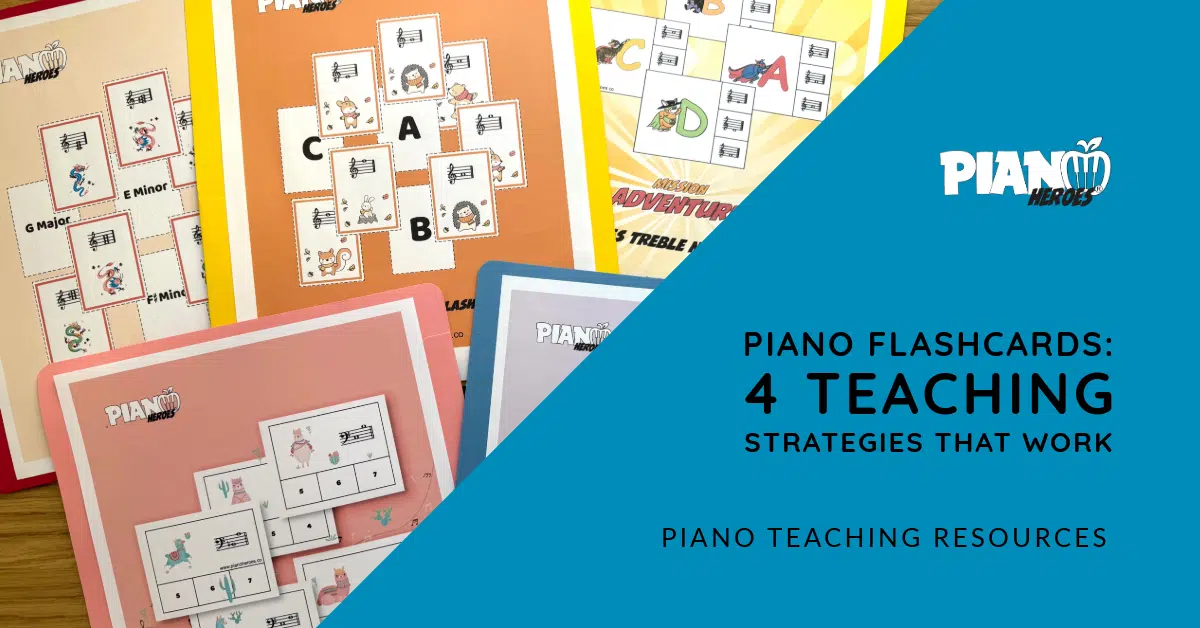
Flashcards might be the oldest trick in the teaching book — and they still work. If you’ve ever needed a low-prep way to review note names, intervals, chords, or key signatures with a wiggly student, a good deck is hard to beat.
They’re affordable, portable, and endlessly flexible. Better still, they turn passive review into active recall — the kind of practise that actually sticks. Whether you’re reinforcing a tricky concept, filling a spare five minutes, or giving a student something fun to do away from the bench, flashcards earn their place in every studio.
Here are four simple ways to work them into your teaching this week — plus Piano Heroes card decks that slot right in.
1. In-Lesson Review (the 5-minute win)
Flashcards are the fastest way to check what’s actually sticking. Pull out a deck at the start of a lesson, ask your student to name five notes or intervals, and within a minute, you’ll know exactly where the gaps are.
For a twist, let your student choose the cards. Picking their own feels like a game, but you still get the diagnosis.
Try it with: Ledger Line Note Flashcards for students moving beyond the staff, or Puppy Treble Intervals and Puppy Bass Intervals for interval drills that don’t feel like drills.
2. Homework & Take-Home Practice
This is the easiest way to send flashcards home. Choose 10–12 cards on a single concept, and ask your student to practise for 5 minutes a day.
A simple system: study each card until your student answers correctly three times in a row, then sort them into two piles: “mastered” and “still tricky.” From there, they only work with the “still tricky” pile. Less volume, more focus, better results.
This works beautifully for key names, note reading, key signature reinforcement, or interval recognition.
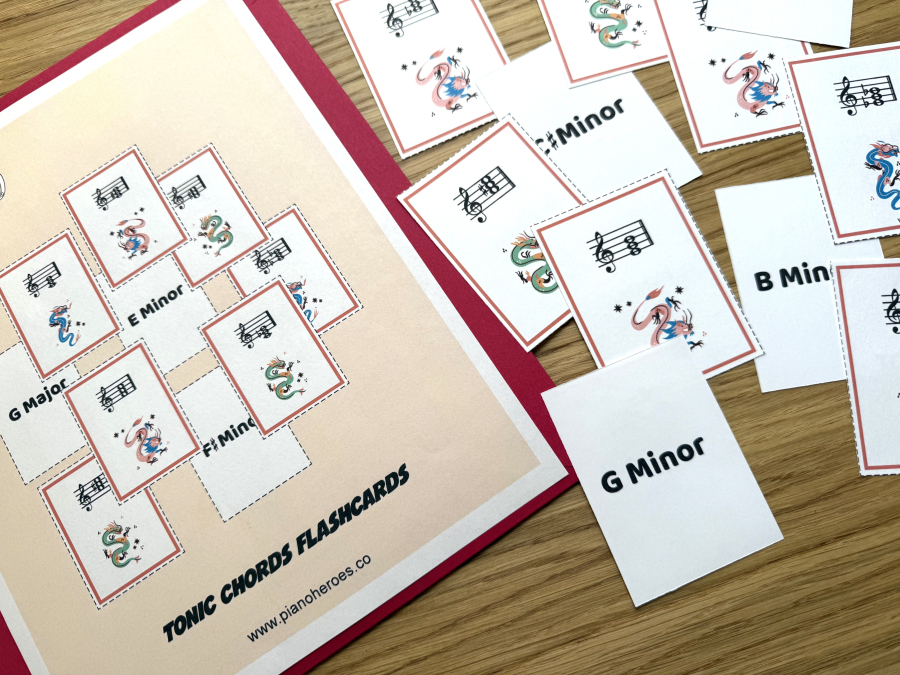
Try it with: Flat Space Key Signature Cards or Tonic Chords Flashcards for a focused, single-concept assignment.
3. Sort, Group & Match
Once a student knows a concept, mix it up. Grab decks covering related ideas, shuffle them together, and ask your student to sort them. This layered activity builds fluency across several concepts at once.
For example, combine Treble Clef Note Flashcards, Bass Clef Note Flashcards, and Ledger Line Note Flashcards, and ask your student to sort by clef: with ledger-line notes in their own pile. Or mix treble and bass interval decks and sort by interval size.
It’s also a great off-the-bench reset when energy dips mid-lesson.
4. Flashcard Games & Partner Play
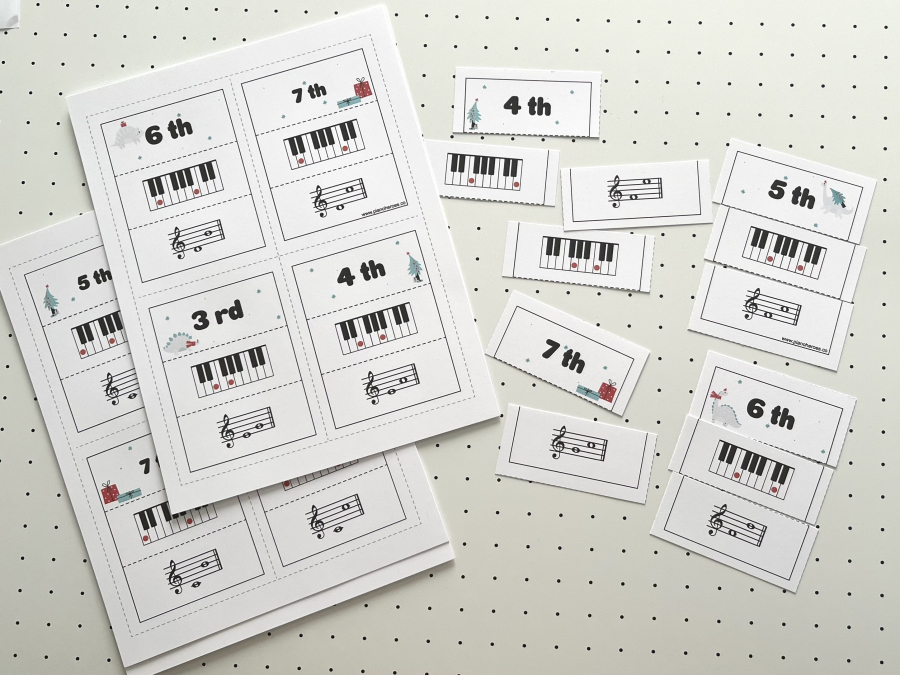
Cards don’t have to stay as flashcards. Many Piano Heroes decks are built with play in mind — Christmas Dino Interval Match, Candy Corn Note Match, and Halloween Kittens Chords all double as matching and memory games. Perfect for group classes, sibling pairs, or a fun end-of-lesson reward.
You can also turn any deck into a speed round: set a timer, see how many cards your student can answer in 60 seconds, and track personal bests across weeks. Students love chasing their own records.
Why active recall matters
Flashcards work because they force students to retrieve information rather than just recognize it. Reviewing the deck in both directions — note → name, then name → note — deepens the learning even further. It’s a small shift that makes a real difference over a few weeks.
Build your flashcard library
The Piano Heroes shop has 34 printable card decks covering note reading, intervals, chords, key signatures, and seasonal themes — each with clear instructions so you can print and play the same day.
👉 Browse all Piano Heroes Flashcards & Cards →
Recommended products
-

Bass Clef Note Flashcards
$3.85 -
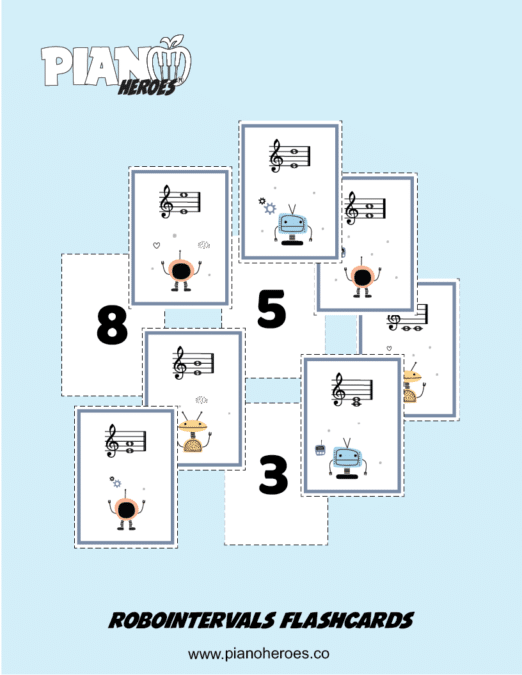
Robointerval Flashcards
$3.85 -
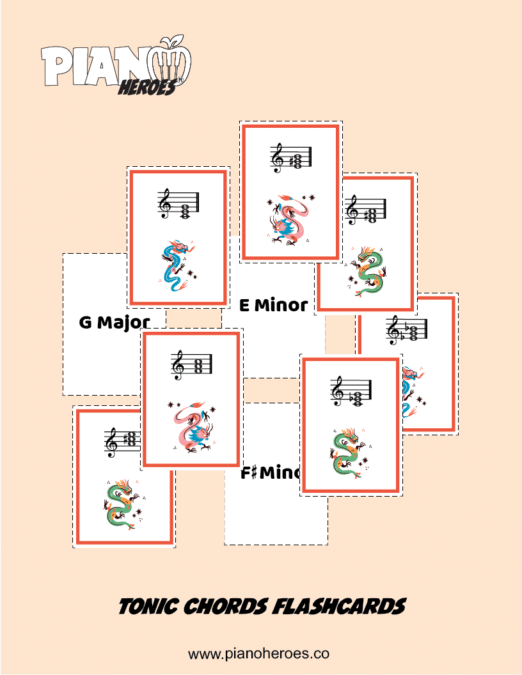
Tonic Chords Flashcards
$3.05 -
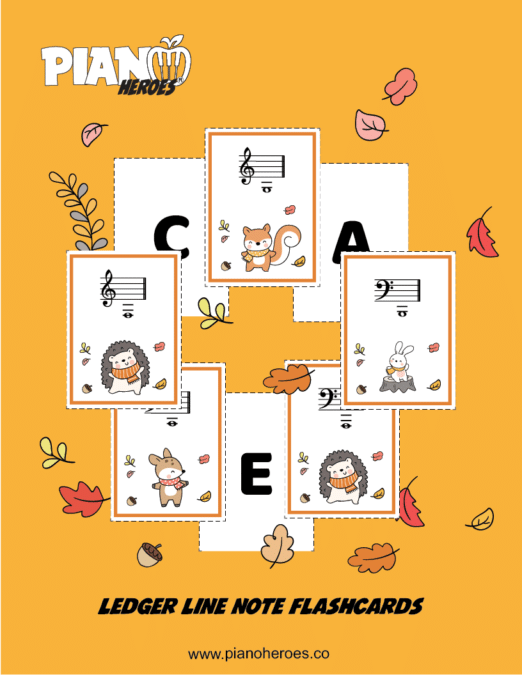
Ledger Line Note Flashcards
$2.95 -
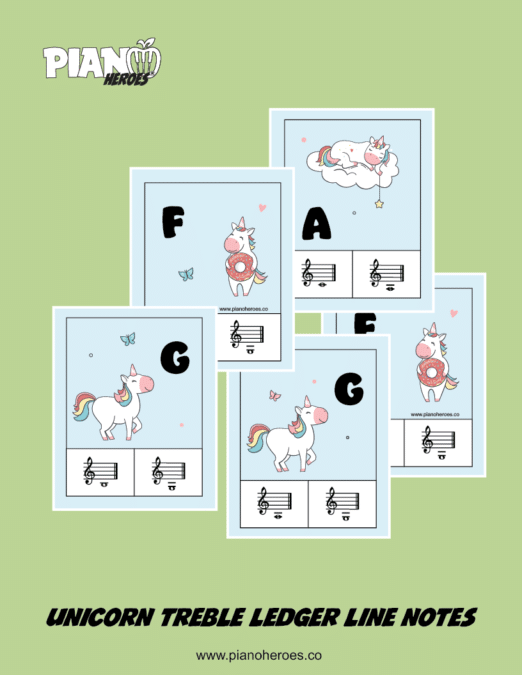
Unicorn Treble Ledger Line Notes Cards
$3.65 -
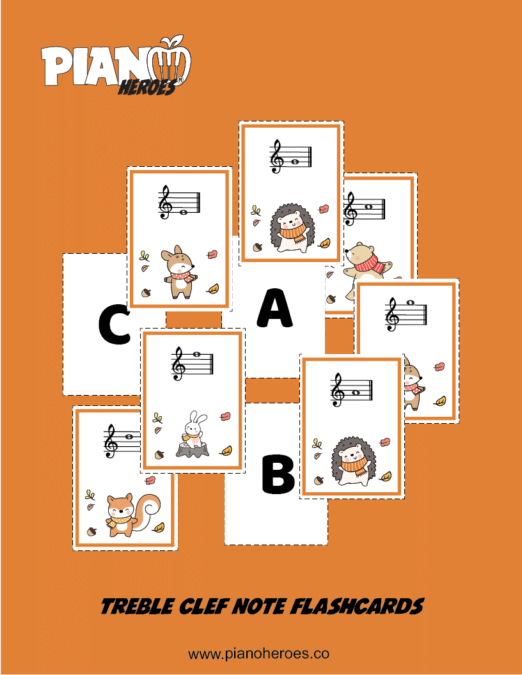
Treble Clef Note Flashcards
$3.85
