Ask any piano teacher which clef gives beginners the most trouble, and the answer is almost always the same: bass clef.
It’s not that kids can’t learn it. It’s that most practice methods are just… boring. Flashcard drills lose their novelty fast. Worksheets feel like homework. And by the time a student reaches Mission Success or RCM Level 1, they need to recognize bass clef notes quickly — not after counting up from the bottom line.
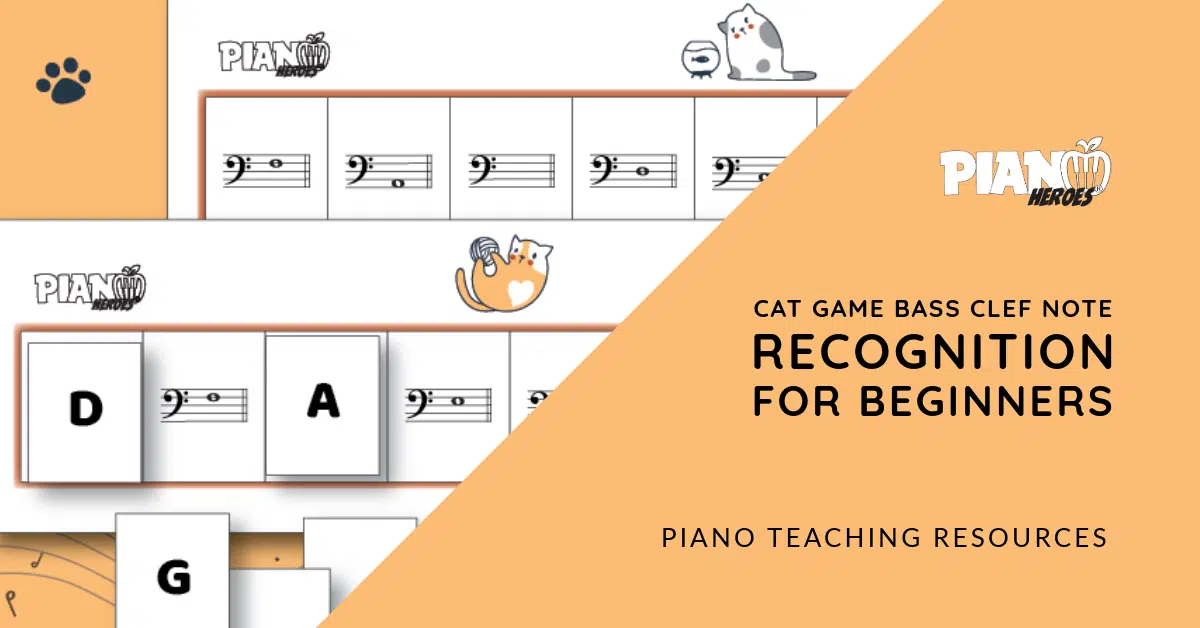
That’s exactly why Cat Game: Bass Notes exists.
What Makes Bass Clef So Tricky for Beginners?
When students first meet the bass clef, a few things work against them:
They’re already juggling a lot. By the time bass clef shows up in lessons, students are managing hand coordination, rhythm, dynamics, and fingering — all at once. Adding a second set of note names to the mix is a real cognitive load.
The lines and spaces feel unfamiliar. The treble clef gets more repetition early on. Bass clef notes don’t show up as often in beginner pieces, which means students get less natural exposure.
Drills don’t build recognition — they build anxiety. The more pressure there is to “just remember it,” the more students freeze when they see a bass clef note on the page.
What actually works is low-stakes, repeated exposure — the kind that happens naturally when a student is playing a game and barely realizes they’re practising.
How Cat Game Bass Notes Work
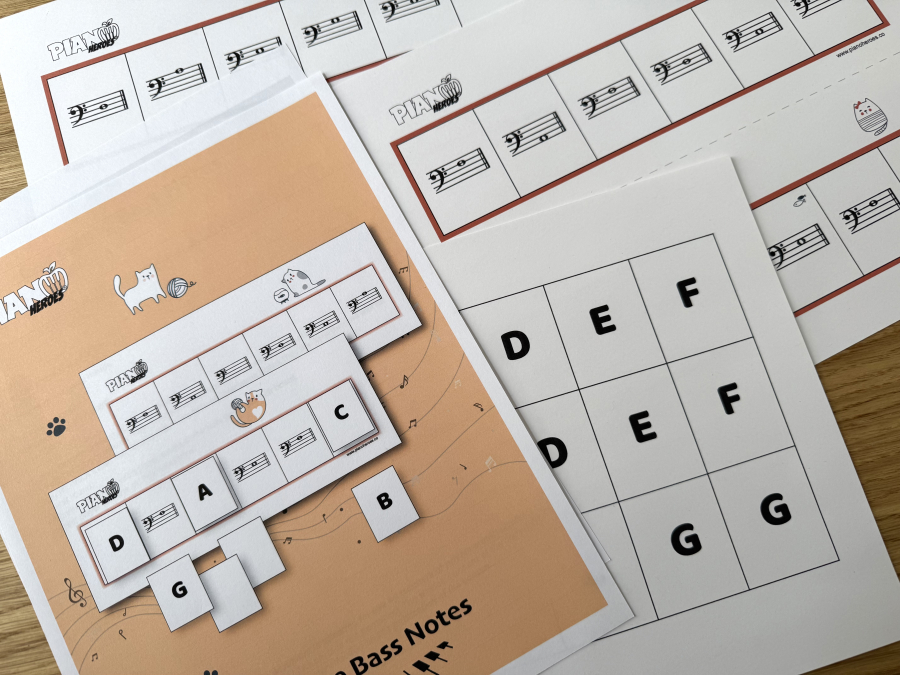
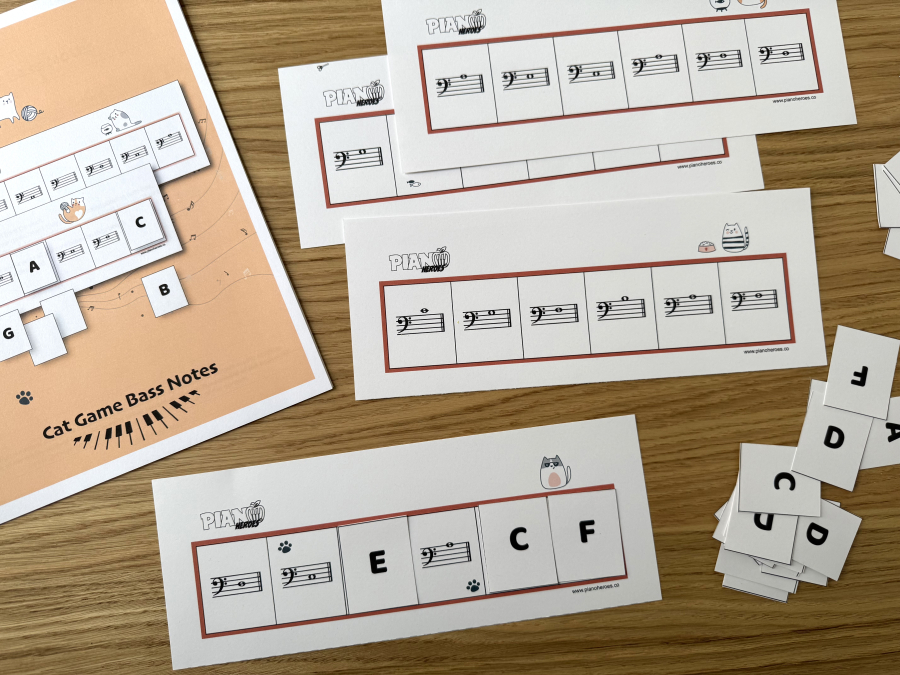
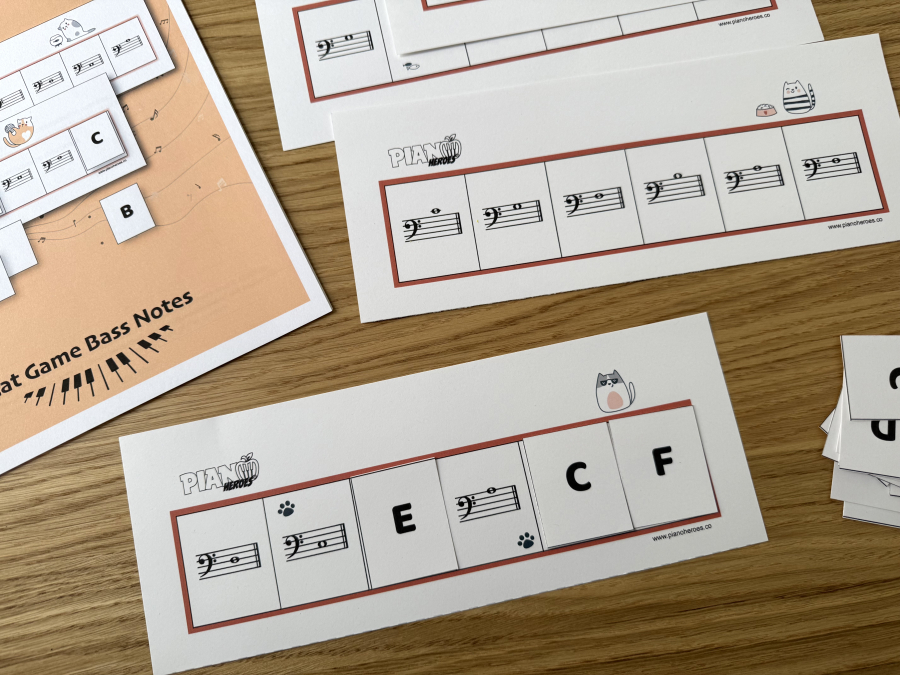
Cat Game: Bass Notes is a printable card-and-board game for beginner piano students. Players draw cards and match them to the correct bass clef notes on their game board — simple mechanics that put note recognition front and centre without any pressure.
The game comes with 10 pages of printable cards and game boards, plus easy-to-follow instructions so you can have it ready in minutes. The cat-themed design is genuinely appealing to kids, which means they’ll actually ask to play it.
Here’s what a typical lesson moment looks like:
- The student arrives, and you’re finishing setup from the previous lesson.
- “Want to play the cat game for a few minutes before we start?”
- They’re already reading bass clef notes — warmed up, relaxed, and ready.
That’s it. No lecture. No pressure. Just repeated, meaningful note recognition baked into something that feels like a reward.
4 Ways to Use It in Your Studio
1. Lesson warm-up: Three to five minutes at the start of a lesson gets the brain engaged and gives you a natural moment to observe which notes your student still hesitates on.
2. Mid-lesson reset: After a tough section of repertoire, a quick round of Cat Game is a perfect off-the-bench break that keeps the learning going without feeling like more work.
3. Group class station: Running a group lesson or recital prep session? Cat Game works beautifully as one station in a rotation. Students can play in pairs while you check in with others.
4. Take-home practice: Send the game home with a student who needs extra repetition. It’s easy for kids to play independently.
A Great Fit for Mission Success and RCM Level 1
Cat Game: Bass Notes is recommended for use with Piano Heroes: Mission Success and aligns with RCM Level 1. If your students are working through Mission Success and you’re looking for something to reinforce the bass clef notes they’re encountering in their pieces, this game fits right into that lesson flow.
Want to Build a Full Bass Clef Toolkit?
Cat Game pairs well with a few other Piano Heroes resources if you want to layer in extra bass clef practice:
- Piano Heroes Bass Note Clip Cards — great for individual note identification, perfect as a warm-up or independent activity.
- Notopoly (Bass C – Low C): Mission Success — a board game format for students who are ready for a longer challenge and a wider note range.
Together, these provide a mix of game types and formats so students don’t see the same activity every week.
Ready to Try It?
Cat Game: Bass Notes is a $2.95 printable you can download today and use this week.
👉Get Cat Game: Bass Notes here
Print it once, laminate it if you’d like, and you’ve got a resource that will outlast many lesson plans.
